
Ahead of your visit
Crowns
One appointment, explained before it starts.
A tooth that's endured significant damage—deep fillings, fractures, or root canal work—may not have enough structure remaining to handle the demands of regular chewing safely. A crown envelops the entire visible tooth surface, restoring its original form and distributing bite pressure evenly so weakened areas aren't bearing the strain alone. Your dentist will explain whether a crown truly suits your tooth's situation, rather than suggesting one as a default choice.
Why this matters
What this treatment aims to improve
Results depend on the starting condition, the treatment plan and how the mouth responds. Your dentist will explain what is realistic for your case before treatment begins.
Load-bearing strength distributed evenly
By encasing the tooth completely, a crown directs biting force across the entire surface rather than letting it concentrate on a weak spot or thin section.
Natural appearance that blends seamlessly
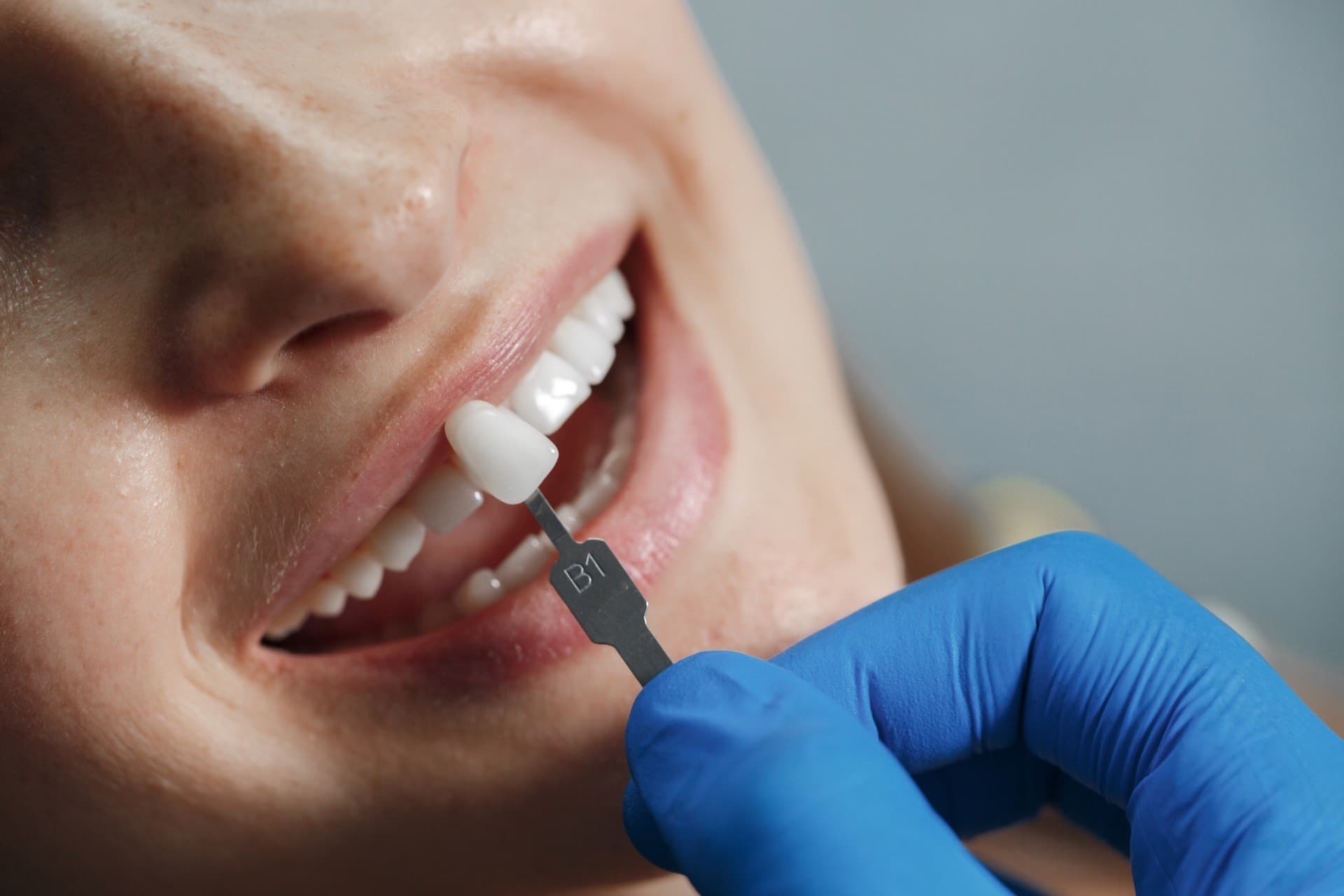
The laboratory crafts your crown's contour and colour to harmonise with neighbouring teeth, allowing it to integrate smoothly within your natural smile.
Protection for teeth after endodontic treatment
A tooth that's undergone root canal therapy can become more fragile afterwards, and a crown is frequently advised to shield it from fracture during everyday function.
How it works
Step by step, from assessment to review
The tooth is prepared
Your dentist removes damaged or decayed tissue and contours the remaining structure, creating a stable foundation for the crown to rest upon.
Measurements are recorded
A digital scan or traditional impression captures the precise anatomy of your tooth and its surroundings, ensuring an accurate fit when the crown arrives.
A temporary restoration protects the tooth
During fabrication, a temporary crown covers the prepared tooth, allowing you to eat and speak without interruption.
Is it suitable for you?
Dentists recommend crowns for several different reasons. Your dentist will clarify exactly why your tooth would benefit before proceeding.
An extensive filling has depleted tooth structure
When minimal natural tooth remains around a filling, a crown provides more reliable support than placing another restoration.
A crack threatens the tooth's integrity
A spreading crack or one that has already caused a fragment to break away typically signals that full crown coverage is necessary.
Root canal therapy has been completed
Endodontic treatment can leave a tooth more prone to fracture, and your dentist may recommend a crown to reduce additional deterioration from routine chewing.
Getting ready
Small things that help before you arrive.
Bring anything relevant
Old X-rays, a list of medications or notes on what you've noticed all help, though you're welcome to come without them.
Flag what makes it harder
If anxiety, a sensitive spot or a rough past experience make visits difficult, tell the team early so they can plan around it.
Give it enough time
A first look needs room for questions and a proper explanation, not just a quick glance and a nod.
Crowns questions
Questions patients often ask
The answers below cover what most patients experience. Your own dentist will tailor the advice to your examination, medical history and treatment plan.
Most commonly two: the first to shape the tooth and record measurements, and the second to place your finished crown when it returns from the laboratory.
Have a different question?
Tell the clinic what you are concerned about. The team can explain the next sensible step before you decide on a visit.
Book when you're ready
Talk it through before you book.
Tell HPA Dental Clinic what you've noticed and they'll help arrange the right appointment for it.
Bring whatever you're wondering about. Your dentist explains as you go, what's happening, why it matters and what comes next, so you leave with a plan that makes sense.